The Nürburgring Nordschleife, often referred to as the "Green Hell," is a 20.8-kilometer ribbon of tarmac that has long been the ultimate proving ground for performance cars. For decades, the leaderboard of this legendary German circuit was dominated by European marques like Porsche, Lamborghini, and Mercedes-Benz. That was until 2017, when a Chinese electric hypercar stunned the automotive world by claiming the production car lap record. The NIO EP9, a futuristic all-electric machine from Shanghai, lapped the Nordschleife in an astonishing 6:45.90 – a time that placed it ahead of every production car that had ever tackled the track.
Behind this audacious achievement lies a story of ambition, technological prowess, and a nation's determination to rewrite the rules of the automotive industry. The EP9 wasn't just a vanity project or a marketing stunt. It represented China's bold declaration that it could not only compete with the established players in the high-performance automotive arena but potentially surpass them. The car's success at the Nürburgring sent shockwaves through the industry, forcing many to reconsider their assumptions about Chinese automotive capabilities.
The Birth of a Benchmark
When NIO (formerly NextEV) unveiled the EP9 in 2016, many dismissed it as another concept car that would never see serious competition. The startup had no heritage in performance cars, no racing pedigree, and no existing road car business. What it did have was substantial backing from Chinese tech investors, including Tencent and Lei Jun of Xiaomi, and a clear vision to push the boundaries of electric vehicle performance.
The EP9's development was remarkably rapid by traditional automotive standards. From initial concept to Nürburgring record holder took just 18 months – an almost unheard-of timeline in the supercar world where development typically spans multiple years. This accelerated pace reflected both the advantages of electric powertrain development (which eliminates many complex mechanical systems found in internal combustion engines) and China's ability to move quickly when national pride and technological ambition align.
Engineering Breakthroughs
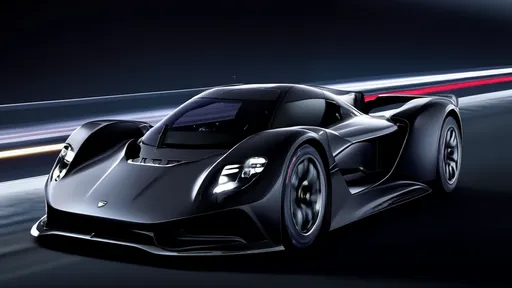
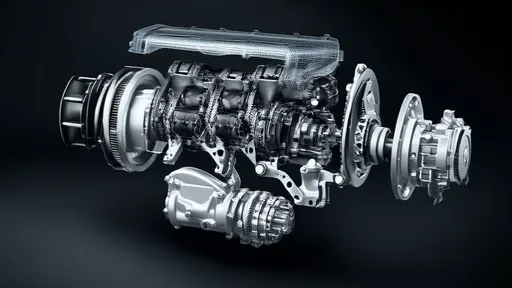
What made the EP9's performance particularly remarkable was how it achieved its blistering lap time. Unlike traditional supercars that rely on decades of incremental improvements to internal combustion engines, the EP9 represented a clean-sheet approach to performance. Its four electric motors produced a combined 1,360 horsepower, delivering instantaneous torque that left even the most powerful gasoline engines feeling sluggish in comparison.
The car's aerodynamics were equally groundbreaking. At 150 mph, the EP9 generated 24,000 Newtons of downforce – more than a Formula 1 car at similar speeds. This extreme downforce allowed the electric hypercar to corner at velocities that would have been unthinkable for production cars just years earlier. The battery system, while heavy at 635 kg, was positioned low in the chassis to maintain a favorable center of gravity, and could be swapped out in just 45 minutes – a feature that hinted at NIO's future plans for its consumer vehicles.
Beyond the Lap Time: Strategic Implications
While the EP9's Nürburgring achievement was impressive on its own merits, the broader implications for China's automotive ambitions were even more significant. The record served multiple strategic purposes: it validated Chinese engineering capabilities on the world stage, attracted global talent to NIO and other Chinese automakers, and demonstrated that electric powertrains could deliver performance that exceeded the best internal combustion engines.
Perhaps most importantly, the EP9's success helped change perceptions about "Made in China" products. For decades, Chinese manufacturers had been associated with low-cost, low-quality imitations. The EP9 represented the opposite – an innovative, technologically advanced product that could outperform established Western brands at their own game. This shift in perception created new opportunities for Chinese automakers to position themselves as premium brands globally.
The Road Ahead
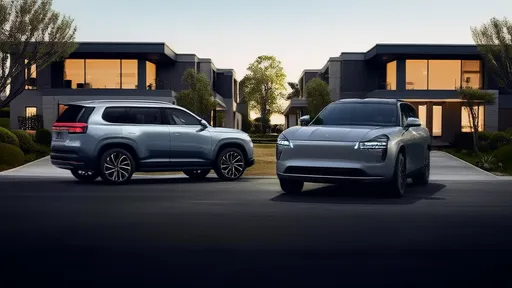
Since the EP9's record run, NIO has focused primarily on developing mass-market electric vehicles, with the ES8, ES6, and EC6 SUVs forming the core of its commercial lineup. However, the lessons learned from the EP9 program continue to influence the company's approach to performance and technology. Features like battery swap technology, which debuted on the EP9, have become a hallmark of NIO's consumer vehicles.
Other Chinese automakers have followed NIO's lead, with companies like BYD, Xpeng, and Geely pushing the boundaries of electric performance. The success of the EP9 demonstrated that electric hypercars could serve as effective "halo" products, generating excitement and technological trickle-down effects for more affordable models. This approach mirrors strategies employed by traditional automakers, where racing and extreme performance projects often lead to innovations that eventually benefit everyday drivers.
As the automotive world continues its rapid transition toward electrification, the NIO EP9's Nürburgring lap may be remembered as a pivotal moment – when China announced its arrival as a serious player in high-performance automotive engineering. The record wasn't just about one fast lap; it was about changing the rules of the game entirely.
By /Jun 14, 2025
By /Jun 14, 2025
By /Jun 14, 2025
By /Jun 14, 2025
By /Jun 14, 2025
By /Jun 14, 2025
By /Jun 14, 2025
By /Jun 14, 2025
By /Jun 14, 2025
By /Jun 14, 2025

By /Jun 14, 2025
By /Jun 14, 2025
By /Jun 14, 2025
By /Jun 14, 2025
By /Jun 14, 2025
By /Jun 14, 2025
By /Jun 14, 2025
