The Porsche 911 has always been an icon of performance, a symbol of precision engineering tailored for the tarmac. But what happens when Stuttgart’s finest decides to take its legendary sports car off-road? The answer is the Porsche 911 Dakar, a machine that defies convention and redefines what a 911 can do. This isn’t just a rally-inspired novelty—it’s a full-blooded, dirt-slaying reinterpretation of the classic sports car formula, and it’s every bit as insane as it sounds.
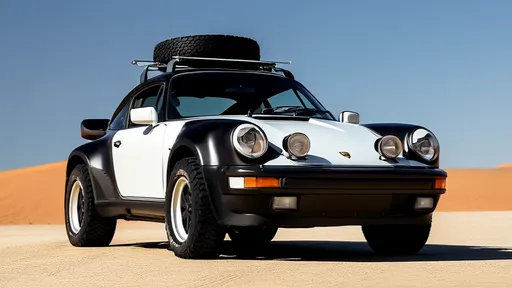
At first glance, the 911 Dakar is unmistakably a 911, but with a twist. Its raised suspension, chunky all-terrain tires, and rugged body cladding hint at its rebellious nature. Porsche has lifted the Dakar by 50 mm compared to a standard 911, giving it the ground clearance to tackle rough terrain without sacrificing the low-slung aggression that defines the model. The front and rear bumpers are redesigned for approach and departure angles, while reinforced underbody protection ensures the car can handle rocks, ruts, and whatever else the wilderness throws at it.
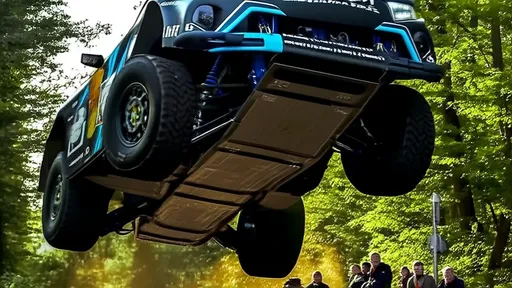
Under the hood, the Dakar packs the same 3.0-liter twin-turbo flat-six found in the 911 Carrera 4 GTS, producing 473 horsepower and 420 lb-ft of torque. That power is sent to all four wheels via an eight-speed PDK transmission, but here’s where things get interesting: Porsche has recalibrated the all-wheel-drive system, stability control, and rear-axle steering to work in harmony on loose surfaces. The result? A 911 that can powerslide through sand, claw its way up gravel inclines, and even tackle moderate jumps—something no other production 911 has been engineered to do.
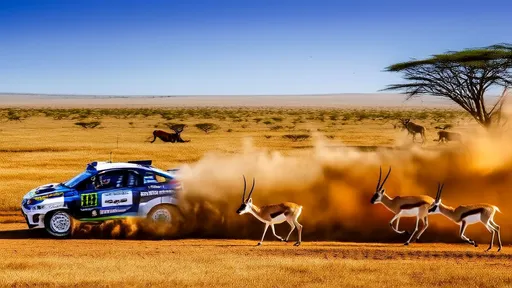
The Dakar’s party trick is its Rallye mode, which adjusts the suspension, throttle response, and traction control for optimal off-road performance. In this setting, the car allows more wheel slip, mimics the behavior of a rear-biased all-wheel-drive rally car, and even softens the dampers to absorb big impacts. There’s also an optional Rallye Design Package that pays homage to Porsche’s 1984 Paris-Dakar-winning 911, complete with a two-tone livery and racing numbers. It’s a nod to the past, but the technology underneath is thoroughly modern.
On pavement, the Dakar is surprisingly civilized. The raised suspension doesn’t ruin the 911’s legendary handling; instead, it adds a new dimension of versatility. Switch to Sport or Sport Plus mode, and the car hunkers down, delivering the sharp, responsive driving experience Porsche is known for. The all-terrain tires hum a bit at highway speeds, but the cabin remains refined, with the same premium materials and tech features found in other 911 models. This is a car that can tear through a desert in the morning and cruise comfortably on the autobahn by afternoon.
Porsche claims the Dakar can accelerate from 0-60 mph in 3.2 seconds—only a few tenths slower than a 911 Carrera 4 GTS—and reach a top speed of 149 mph. Those numbers are impressive for any sports car, let alone one that can handle off-road adventures. The brakes, borrowed from the 911 Turbo, provide ample stopping power, while the lightweight construction (thanks in part to a carbon fiber hood and optional roof basket) keeps the Dakar agile despite its added ruggedness.
So, who is this car for? It’s not just for wealthy collectors looking for a quirky addition to their garage. The 911 Dakar is a statement—a reminder that Porsche’s engineering prowess knows few limits. It’s for drivers who want the thrill of a 911 but crave the freedom to explore beyond the pavement. Whether it’s blasting down a forest trail, conquering a snowy mountain pass, or simply turning heads on the street, the Dakar delivers an experience unlike any other 911 before it.
Porsche plans to build only 2,500 units of the 911 Dakar, making it a rare breed even among limited-edition 911s. Pricing starts at around $223,000, but with options and dealer markups, expect to pay significantly more. Is it worth it? For those who value exclusivity, performance, and sheer audacity, the answer is a resounding yes. The 911 Dakar isn’t just a capable off-roader—it’s a celebration of what happens when Porsche throws the rulebook out the window and builds a 911 that can go anywhere.
In a world where SUVs dominate the luxury market, the 911 Dakar is a refreshing anomaly. It proves that you don’t need a high-riding, heavy-bodied truck to tackle rough terrain. With the right engineering, even a sports car as revered as the 911 can become a desert-conquering, trail-blazing machine. The Dakar isn’t just a variant of the 911—it’s a reinvention, and one that cements Porsche’s reputation as a brand that dares to do the unexpected.
By /Jun 14, 2025

By /Jun 14, 2025
By /Jun 14, 2025
By /Jun 14, 2025
By /Jun 14, 2025
By /Jun 14, 2025
By /Jun 14, 2025
By /Jun 14, 2025
By /Jun 14, 2025
By /Jun 14, 2025
By /Jun 14, 2025
By /Jun 14, 2025
By /Jun 14, 2025
By /Jun 14, 2025
By /Jun 14, 2025
By /Jun 14, 2025
By /Jun 14, 2025
