The Jeddah Corniche Circuit has earned a fearsome reputation since its Formula 1 debut in 2021. Nestled between the Red Sea and Saudi Arabia's bustling second city, this high-speed street track immediately became known as the most dangerous circuit on the calendar – a title that organizers have been working tirelessly to shed through extensive safety upgrades.
The Need for Change
When Formula 1 first arrived in Jeddah, drivers were visibly shaken by the circuit's extreme characteristics. The combination of blind corners taken at over 300km/h, minimal runoff areas, and concrete barriers placed perilously close to the racing line created what many described as an unacceptable risk. The 2021 race saw multiple high-speed crashes, with Mick Schumacher's violent qualifying shunt serving as a wake-up call for the sport.
What makes Jeddah uniquely dangerous is its unusual hybrid nature. Unlike traditional street circuits like Monaco with slower corners, or purpose-built tracks with ample runoff, Jeddah blends street circuit constraints with the speeds of a permanent racing facility. The original design featured 27 corners – most taken flat-out – with walls sometimes just meters from cars traveling at Formula 1's top speeds.
Engineering a Safer Beast
The first major changes came for the 2022 event. Engineers widened the track at critical points, most notably at Turn 14 where Schumacher had crashed. The corner was reprofiled to reduce the angle of impact should a car lose control. Additional Tecpro barriers – energy-absorbing plastic blocks – were installed in strategic locations, replacing some concrete walls.
Perhaps the most significant alteration came at the final corner complex. Previously a flat-out left-right flick taken at nearly 300km/h, the section was modified to create a more pronounced chicane. While this reduced speeds slightly, it dramatically improved the angle of incidence for any potential crashes. The changes didn't go unnoticed by drivers, with Max Verstappen commenting that while the track remained challenging, it no longer felt "on the edge of acceptable."
Continuous Improvement
The safety upgrades didn't stop after 2022. For the 2023 race, organizers implemented what they called "Phase Two" of modifications. This included resurfacing sections of the track to improve consistency, adjusting camber on several corners to reduce the chance of cars being launched, and installing additional safety lighting to improve visibility during night running.
One of the less visible but crucial changes involved the circuit's drainage system. During the inaugural race, oil spills and minor flooding had created additional hazards. The new drainage solutions help maintain consistent track conditions even when facing the rare but possible Red Sea rain showers.
The Human Factor
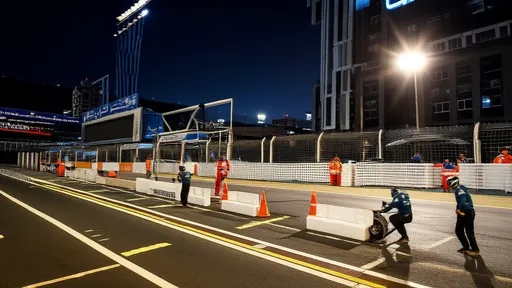
Beyond physical changes to the circuit, race organizers have implemented procedural improvements. Medical response times have been reduced through strategically placed intervention vehicles, and local marshals now undergo specialized training programs developed in collaboration with FIA safety experts.
The pit lane – another area of concern in early races due to its narrow width and awkward entry – saw modifications to its geometry. The changes allow for safer entries and exits while maintaining the challenging nature that makes Jeddah unique among street circuits.
Balancing Safety and Challenge
What makes the Jeddah safety story particularly interesting is how organizers have managed to reduce risk without neutering the circuit's character. Unlike some tracks where heavy-handed safety measures have made racing processional, Jeddah remains one of the most exciting venues on the calendar.
The changes have been subtle enough that lap times have only increased marginally – the track record set in 2023 was just 0.8 seconds slower than the inaugural pole position. This delicate balance between safety and spectacle is something other street circuits hoping to join the Formula 1 calendar are studying closely.
The Future of High-Speed Streets
Jeddah's evolution may serve as a blueprint for future street circuits in the Formula 1 world. As the sport expands into new markets, many want the glamour of a city race without compromising on racing quality or safety standards. The Saudi approach shows that with enough investment and ingenuity, even the most dangerous layouts can be tamed.
Looking ahead, circuit officials have hinted at further refinements. Potential future upgrades include more advanced barrier technologies, improved spectator protection in key viewing areas, and continued work on sightlines for drivers approaching the fastest sections.
The story of Jeddah's safety upgrades demonstrates Formula 1's evolving approach to risk management. No longer willing to accept "danger" as an inherent part of racing's appeal, the sport is proving that with proper investment and attention to detail, even the most intimidating circuits can be made to conform to modern safety expectations while retaining their essential character.

By /Jun 14, 2025

By /Jun 14, 2025
By /Jun 14, 2025

By /Jun 14, 2025

By /Jun 14, 2025

By /Jun 14, 2025

By /Jun 14, 2025

By /Jun 14, 2025
By /Jun 14, 2025

By /Jun 14, 2025
By /Jun 14, 2025

By /Jun 14, 2025
By /Jun 14, 2025

By /Jun 14, 2025

By /Jun 14, 2025
By /Jun 14, 2025

By /Jun 14, 2025
