Ideal L8 vs. AITO M7: The Battle for Family Users in Extended-Range SUVs

Jun 14, 2025 By

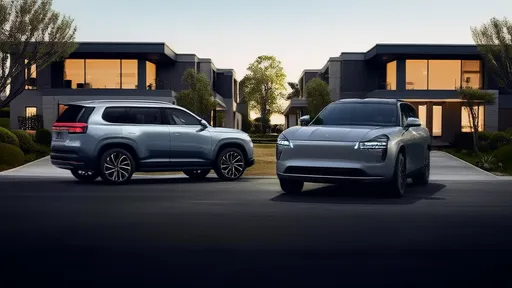
The battle for dominance in the family-oriented extended-range SUV market is heating up, with two Chinese automotive heavyweights—Li Auto's L8 and AITO's M7—vying for consumer attention. Both vehicles promise the perfect blend of electric efficiency and long-distance capability, but they cater to slightly different sensibilities within the same demographic. As families increasingly prioritize space, comfort, and versatility, these models represent the cutting edge of China's booming new energy vehicle sector.

The Ideal L8: A Tech-Savvy Family Companion

Li Auto has built its reputation on creating vehicles tailored specifically for family use, and the L8 is no exception. With its sleek, minimalist exterior and spacious three-row interior, the L8 immediately positions itself as a practical yet premium option. The vehicle's extended-range electric powertrain delivers an impressive 1,315 km combined range (CLTC), addressing range anxiety while maintaining low operating costs for daily commuting.

Where the L8 truly shines is in its tech integration. The dual 15.7-inch touchscreens for rear passengers, combined with the innovative heads-up display and voice control system, create a connected experience that appeals to digital-native families. The vehicle's navigation-assisted range management system intelligently plans charging stops during long journeys, a thoughtful touch for road-tripping families.

The AITO M7: Huawei's Smart Mobility Vision

Developed under Huawei's smart car ecosystem, the AITO M7 brings a different approach to the family SUV segment. While slightly more conservative in exterior styling compared to the L8, the M7 counters with Huawei's formidable HarmonyOS-powered infotainment system. The seamless device integration allows families deeply invested in the Huawei ecosystem to enjoy unparalleled connectivity between their devices and vehicle.

The M7's powertrain offers similar extended-range capability with a 1,300 km maximum range (CLTC), but distinguishes itself with Huawei's DriveONE electric drive system that promises smoother acceleration and quieter operation. The cabin emphasizes premium materials and acoustic insulation, creating a more traditional luxury atmosphere compared to the L8's tech-forward approach.

Space Wars: Configuring for Family Needs

Both vehicles offer three-row seating, but with different philosophies. The L8 provides more flexible seating configurations, including an optional rear entertainment system that can keep children occupied during long drives. Its 2+2+2 layout with walk-through aisle between second-row seats makes accessing the third row significantly easier—a crucial consideration for families with young children or elderly passengers.

The M7 counters with slightly more generous third-row legroom and what many reviewers describe as plusher seating surfaces. However, its 2+2+2 configuration lacks the same ease of movement between rows. Storage solutions differ as well, with the L8 offering more innovative small-item storage compartments throughout the cabin, while the M7 provides larger underseat storage areas.

Safety and Driver Assistance: Diverging Approaches

Safety technology represents another key battleground. The L8 comes equipped with Li Auto's AD Max system featuring lidar and extensive camera coverage, enabling advanced navigation-assisted driving functions. Its child-oriented features include rear seat reminder alerts and integrated child seat anchors.

The M7 relies more heavily on Huawei's computing power and AI capabilities for its driver assistance systems. While it lacks lidar, the vehicle's sensor fusion approach and over-the-air update capability promise continuous improvement of safety features. Both vehicles offer comprehensive airbag protection and rigid body structures, but the L8 includes more active safety features as standard equipment.

The Charging and Energy Equation

As extended-range vehicles, both the L8 and M7 can operate as pure EVs for daily use while eliminating range anxiety for longer trips. The L8's 65L fuel tank provides slightly better long-distance capability compared to the M7's 60L tank, though real-world differences are minimal. Charging speed favors the M7 slightly, with faster DC charging capability, but the L8 offers more flexible charging scheduling options through its app.

An interesting divergence appears in their energy management systems. The L8 prioritizes electric driving in most scenarios, only engaging the range extender when necessary. The M7 takes a more balanced approach, sometimes running both systems simultaneously for optimal performance. This results in slightly different driving characteristics that may appeal to different family needs.

The Price Proposition

Positioned in the 300,000-400,000 RMB range, both vehicles target China's upper-middle-class families. The L8 starts at a slightly lower entry point but can climb quickly with options, while the M7 maintains more consistent pricing across trims. Interestingly, the M7 currently offers more battery warranty coverage (8 years/160,000 km vs the L8's 8 years/120,000 km), which could influence long-term ownership decisions.

Resale value remains uncertain for both models as the extended-range SUV market continues to evolve. However, Li Auto's stronger brand recognition in this segment currently gives the L8 an edge in perceived value retention, while the M7 benefits from Huawei's formidable reputation in technology and customer service.

The Verdict: Different Flavors for Different Families

Ultimately, the choice between the L8 and M7 comes down to family priorities. The L8 appeals to tech-forward families who value cutting-edge features and flexible interior configurations. Its slightly more dynamic driving experience and comprehensive standard equipment make it ideal for families who see their vehicle as both transportation and living space.

The M7 caters to families prioritizing refined comfort and seamless tech integration, particularly those already invested in Huawei's ecosystem. Its more traditional luxury approach and focus on cabin isolation create a different atmosphere that some may prefer for daily family hauling.

As China's automotive market continues its rapid electrification, the competition between these two approaches to family mobility will only intensify. Both Li Auto and AITO have demonstrated remarkable ability to understand and address the nuanced needs of modern Chinese families, ensuring that regardless of choice, consumers are getting increasingly sophisticated options tailored to their lifestyles.
Recommend Posts
Auto

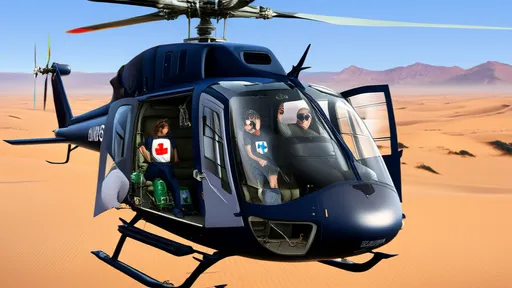
Dakar Helicopter Rescue: The Air ICU in the Desert

By /Jun 14, 2025

The vast, unforgiving expanse of the Dakar Desert has long been a proving ground for human endurance and technological innovation. Each year, the Dakar Rally pushes competitors to their limits, but behind the scenes, another battle rages—one fought not for glory, but for survival. High above the dunes, a fleet of specialized medical helicopters operates as airborne intensive care units, ready to swoop in when disaster strikes.
Auto

Chaos of Heroes Era: 2005 WRC Seven Brands' Championship History"

By /Jun 14, 2025

The 2005 World Rally Championship (WRC) season was a battleground like no other. Seven different manufacturers—Citroën, Ford, Mitsubishi, Peugeot, Škoda, Subaru, and reigning champions Citroën—entered the fray, each armed with cutting-edge technology, relentless drivers, and the ambition to dominate. What unfolded was a chaotic, unpredictable, and thrilling season where no single team could establish clear supremacy. Instead, the championship became a war of attrition, adaptability, and sheer willpower.
Auto

How Does the Audi R18 TDI's Diesel Engine Dominate Le Mans?

By /Jun 14, 2025

The Audi R18 TDI stands as a testament to the ingenuity and relentless pursuit of performance that defines endurance racing. When it first roared onto the Circuit de la Sarthe, it wasn’t just another prototype—it was a statement. A diesel-powered machine in a world dominated by gasoline engines, the R18 TDI didn’t just compete; it dominated. Its success at the 24 Hours of Le Mans wasn’t accidental. It was the result of meticulous engineering, strategic innovation, and a deep understanding of the unique demands of endurance racing.
Auto

The Art of Balancing Different Power Formats in Le Mans Hypercar Regulations

By /Jun 14, 2025

The 24 Hours of Le Mans has always been a crucible of automotive innovation, but never more so than in the Hypercar era. At the heart of this new category lies a delicate balancing act—one that seeks to level the playing field between wildly different powertrain philosophies while preserving the essence of endurance racing. The FIA and ACO's "Balance of Performance" (BoP) system isn't just about adding ballast or restricting turbo boost; it's an ongoing experiment in engineering democracy, where hydrogen, hybrid, and pure combustion machines must coexist without any single approach dominating.
Auto

How to Protect High-Voltage Batteries in Hybrid Systems During Flight?

By /Jun 14, 2025

The high-voltage battery systems in World Rally Championship (WRC) hybrid vehicles face extreme conditions—violent jumps, rough terrain, and rapid acceleration. Protecting these critical components isn’t just about durability; it’s a matter of safety, performance, and regulatory compliance. Engineers have developed sophisticated solutions to ensure these batteries withstand the brutal demands of rally racing while delivering peak power when needed most.
Auto

F1 Ground Effect Returns: How Will the 2026 Regulations Change Overtaking?

By /Jun 14, 2025

The return of ground effect aerodynamics in Formula 1 has been one of the most significant technical shifts in recent years, and its evolution continues to shape the future of the sport. As the FIA prepares for the 2026 regulation overhaul, the focus remains on enhancing wheel-to-wheel racing and improving overtaking opportunities. The upcoming changes promise to redefine how cars interact with dirty air and how drivers can attack or defend positions on track. But what exactly will these adjustments mean for the spectacle of F1 racing?
Auto

Behind NIO EP9's Nurburgring Record: The Ambition of Chinese Electric Supercars

By /Jun 14, 2025

The Nürburgring Nordschleife, often referred to as the "Green Hell," is a 20.8-kilometer ribbon of tarmac that has long been the ultimate proving ground for performance cars. For decades, the leaderboard of this legendary German circuit was dominated by European marques like Porsche, Lamborghini, and Mercedes-Benz. That was until 2017, when a Chinese electric hypercar stunned the automotive world by claiming the production car lap record. The NIO EP9, a futuristic all-electric machine from Shanghai, lapped the Nordschleife in an astonishing 6:45.90 – a time that placed it ahead of every production car that had ever tackled the track.
Auto

Baha 1000: Modified Pickup's Self-Destruction in the Mexican Desert"

By /Jun 14, 2025

The Baja 1000 is not just a race—it’s a brutal test of man and machine against some of the most unforgiving terrain on the planet. Stretching over 1,000 miles of Mexico’s Baja California Peninsula, the race demands speed, endurance, and a willingness to embrace chaos. But in recent years, a new trend has emerged: heavily modified pickup trucks, built to conquer the desert, often end up destroying themselves in the process. These machines, engineered to withstand punishment, frequently meet their demise not at the hands of competitors, but through their own excesses.
Auto

From Nazca to Le Mans: Jimmie Johnson's Dual Adventure

By /Jun 14, 2025

The world of motorsport has witnessed many legends, but few have dared to cross the boundaries of their discipline to test their skills in entirely different racing arenas. Jimmie Johnson, a seven-time NASCAR Cup Series champion, is one such rare breed. His journey from the high-speed ovals of NASCAR to the endurance challenges of the 24 Hours of Le Mans is a story of ambition, adaptability, and an unquenchable thirst for competition.
Auto

MotoE World Cup: The Fast Charging Challenge of Electric Moto Racing

By /Jun 14, 2025

The MotoE World Cup has emerged as one of the most exciting developments in motorsport, showcasing the potential of electric motorcycles on a global stage. While the racing itself delivers high-speed thrills, one of the most critical challenges facing the series is the rapid charging infrastructure required to keep these machines competitive. Unlike traditional internal combustion engines that can be refueled in seconds, electric bikes demand sophisticated charging solutions to minimize downtime during races.
Auto

Truck Team's Nightmare: The Accident Rescue Record of a 500-Horsepower Colossus"

By /Jun 14, 2025

The night air hung thick with diesel fumes as the tow truck's floodlights carved jagged shadows across the mangled guardrail. What should have been a routine highway patrol had turned into a six-hour odyssey of hydraulic winches, shouted warnings, and the ever-present dread of 18 tons of steel deciding to finish its gravity-fueled descent into the ravine. This wasn't just any recovery operation—it was a dance with a 500-horsepower leviathan that had already demonstrated its contempt for the laws of physics.
Auto

WRC Kenya Stage: A Wild Race Course with Wildlife and Racing Cars

By /Jun 14, 2025

The WRC Safari Rally Kenya is unlike any other event in the World Rally Championship calendar. Where else can you find high-speed rally cars tearing through rugged terrain while elephants, giraffes, and lions roam nearby? This is motorsport at its most untamed—a thrilling collision of man, machine, and nature that pushes drivers to their limits while demanding respect for the wild landscapes they invade.
Auto

Jeddah Circuit, Saudi Arabia: A Record of Safety Upgrades for the Most Dangerous Street Race

By /Jun 14, 2025

The Jeddah Corniche Circuit has earned a fearsome reputation since its Formula 1 debut in 2021. Nestled between the Red Sea and Saudi Arabia's bustling second city, this high-speed street track immediately became known as the most dangerous circuit on the calendar – a title that organizers have been working tirelessly to shed through extensive safety upgrades.
Auto

Porsche 911 Dakar: How Crazy is the Off-Road Capable 911?

By /Jun 14, 2025

The Porsche 911 has always been an icon of performance, a symbol of precision engineering tailored for the tarmac. But what happens when Stuttgart’s finest decides to take its legendary sports car off-road? The answer is the Porsche 911 Dakar, a machine that defies convention and redefines what a 911 can do. This isn’t just a rally-inspired novelty—it’s a full-blooded, dirt-slaying reinterpretation of the classic sports car formula, and it’s every bit as insane as it sounds.
Auto

Ferrari Daytona SP3: A V12 Hybrid Masterpiece Paying Tribute to Classics

By /Jun 14, 2025

The automotive world stood still when Ferrari unveiled the Daytona SP3, a machine that effortlessly bridges the gap between the golden era of racing and the cutting-edge technology of today. This isn't merely another hypercar; it's a rolling sculpture that pays homage to Ferrari's legendary sports prototypes of the 1960s while showcasing what modern engineering can achieve when unleashed without constraints.
Auto

Deciphering Toyota's THS Hybrid System: The Mystery of 25 Years of Technological Accumulation

By /Jun 14, 2025

For over two decades, Toyota’s Hybrid Synergy Drive (THS) has stood as a benchmark in hybrid vehicle technology. Since its debut in the iconic Prius, the system has undergone continuous refinement, blending efficiency, reliability, and performance in a way few competitors have matched. What sets THS apart isn’t just its engineering brilliance but the philosophy behind it—a relentless pursuit of incremental improvement rather than chasing fleeting trends. This deep dive explores how Toyota’s 25-year journey with THS has shaped the hybrid landscape.
Auto

Ideal L8 vs. AITO M7: The Battle for Family Users in Extended-Range SUVs

By /Jun 14, 2025

The battle for dominance in the family-oriented extended-range SUV market is heating up, with two Chinese automotive heavyweights—Li Auto's L8 and AITO's M7—vying for consumer attention. Both vehicles promise the perfect blend of electric efficiency and long-distance capability, but they cater to slightly different sensibilities within the same demographic. As families increasingly prioritize space, comfort, and versatility, these models represent the cutting edge of China's booming new energy vehicle sector.