For over two decades, Toyota’s Hybrid Synergy Drive (THS) has stood as a benchmark in hybrid vehicle technology. Since its debut in the iconic Prius, the system has undergone continuous refinement, blending efficiency, reliability, and performance in a way few competitors have matched. What sets THS apart isn’t just its engineering brilliance but the philosophy behind it—a relentless pursuit of incremental improvement rather than chasing fleeting trends. This deep dive explores how Toyota’s 25-year journey with THS has shaped the hybrid landscape.
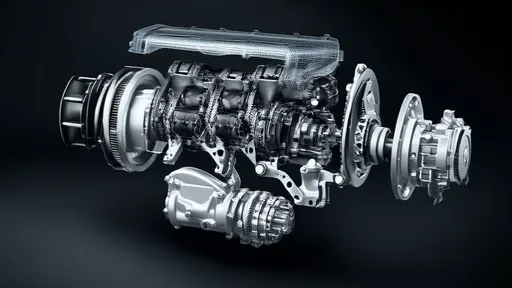
At the heart of the THS system lies a clever interplay between an internal combustion engine and electric motors, orchestrated by a power-split device. Unlike conventional hybrids that rely on heavy battery packs or complex transmissions, Toyota’s approach prioritizes simplicity and synergy. The power-split device, often described as a planetary gearset, acts as the system’s brain, seamlessly distributing power between the engine, motors, and wheels. This design eliminates the need for a traditional gearbox, reducing mechanical losses and enhancing efficiency. It’s a solution so elegant that competitors have spent years attempting to replicate it—with mixed success.
One of the most underappreciated aspects of THS is its adaptability. Over the years, Toyota has deployed the system across a diverse range of vehicles, from compact sedans to hulking SUVs. Each iteration reflects subtle tweaks tailored to the vehicle’s purpose. For example, the THS in a Lexus RX hybrid emphasizes smoothness and quiet operation, while the same system in a RAV4 Hybrid prioritizes torque delivery for off-road capability. This flexibility underscores Toyota’s understanding that hybridization isn’t a one-size-fits-all solution.
Battery technology has been another critical pillar of THS evolution. Early nickel-metal hydride (NiMH) batteries, while durable, were limited in energy density. Toyota’s gradual shift to lithium-ion in newer models has unlocked gains in both efficiency and packaging. Yet, the company has resisted the urge to chase extreme energy density at the expense of longevity. Where some rivals push battery performance to its limits, Toyota opts for conservative charge cycles and robust thermal management—choices that explain why THS-equipped vehicles often outlast their competitors.
The real magic of THS, however, lies in its software. Toyota’s engineers have spent decades fine-tuning the algorithms that govern power flow. The system doesn’t just react to driver inputs; it anticipates them. Gentle acceleration might prompt the car to rely solely on electric power, while a sudden throttle stomp triggers a perfectly timed collaboration between engine and motors. Even factors like road gradient or climate control usage are factored into these split-second decisions. This level of polish can’t be rushed—it’s the product of millions of real-world miles and countless iterations.
Critics often argue that THS feels dated compared to flashy plug-in hybrids or pure EVs. But this misses the point. Toyota’s system was never designed to be cutting-edge in the traditional sense. Instead, it embodies the Japanese principle of kaizen—continuous improvement. Every component, from the motor windings to the inverter cooling, has been scrutinized and refined over 25 years. The result is a system that works so effortlessly most drivers never think about it. And in the automotive world, that’s the highest compliment.
Looking ahead, Toyota faces a market increasingly obsessed with electrification. Yet THS isn’t going away. If anything, its role may grow as automakers realize that full electrification isn’t feasible for every customer or region. The latest THS iterations already incorporate lessons from Toyota’s fuel cell and BEV programs, hinting at a future where hybrid systems serve as a bridge to more advanced technologies. After a quarter-century, THS remains a testament to the power of patience and precision in an industry too often dazzled by the next big thing.

By /Jun 14, 2025

By /Jun 14, 2025
By /Jun 14, 2025
By /Jun 14, 2025

By /Jun 14, 2025
By /Jun 14, 2025
By /Jun 14, 2025

By /Jun 14, 2025
By /Jun 14, 2025
By /Jun 14, 2025

By /Jun 14, 2025

By /Jun 14, 2025

By /Jun 14, 2025

By /Jun 14, 2025
By /Jun 14, 2025
By /Jun 14, 2025
By /Jun 14, 2025
